

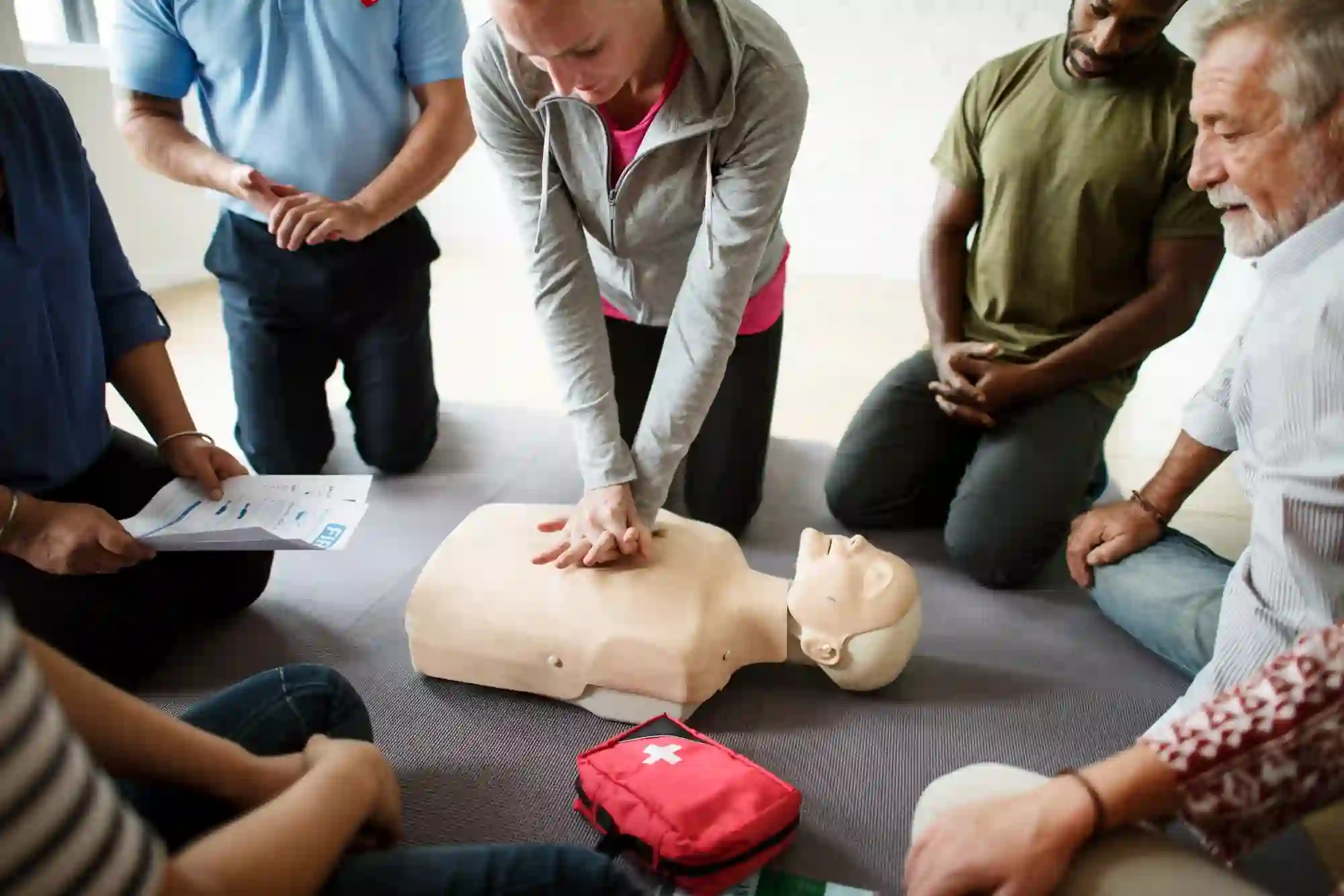
CPR stands for Cardiopulmonary Resuscitation. Its training teaches you how to save a life during cardiac arrest and other emergencies. You’re equipped with the knowledge needed to perform chest compressions, administer rescue breaths, and use an AED.
When you take that action, the oxygen-rich blood continues to flow to the brain until advanced medical help arrives. Getting trained in CPR is crucial as emergencies can rear their ugly heads at any time. In today’s article, we’ll discuss what it covers and why it’s important.
Let’s get started.
What CPR Training Covers
During the CPR training, you’ll learn how to recognize cardiac arrest and other similar emergencies. You’ll also get a solid idea of different chest compression techniques, including the required intensity and speed of hand movement.
Core Techniques Used
The first is hands-only CPR. It is done for sudden adult collapse. It focuses only on pushing hard and fast in the center of the chest. We then have conventional CPR that covers a cycle of 30 chest compressions followed by 2 rescue breaths. It works best for children or victims of drowning.
Age-specific adjustments are also taught, where you learn exactly how to scale force based on a person’s age.
Is CPR Training Part of Nursing Programs?
CPR training is a mandatory part of every nursing program. Nurses must complete AHA and BLS courses before actually performing their duties in the field. The training also bridges the gap between cardiac events and advanced medical care. It also leads to higher patient survival rates.
Practicing through simulation trains nurses to manage panic and make rapid (and accurate) decisions. Since the medical guidlines continually evolve, receiving training also allows nurses to retain the skills needed in modern settings.
Lastly, a calm nurse who knows exactly what to do and what to avoid will bring extraordinary comfort to patients and families.
Why the Training Is Crucial
Cardiac arrest can occur anywhere, including at home, work, school, or while traveling. Without immediate aid, brain damage could begin in minutes. But if you have trained responders nearby, the chances of survival increase dramatically.
And taking a course builds real, life-saving skills. You’d feel confident knowing you can be a source of help to people when they need it most.
When you’re a caregiver, teacher, or healthcare provider, you’ll also need this certification. You can’t get past the interview phase if you don’t have this.
How to Choose a Reliable Institute for Training
First and foremost, check whether the institute is an authorized training center and adheres to international standards and protocols. You also need to see if you need basic layperson CPR or a professional Basic Life Support (BLS) certificate.
Avoid only-only courses as you can’t get hands-on practice there. Also look for classes that offer smaller groups so instructors can properly correct your form and compression depth.
Reputable centers also provide up-to-date student workbooks to give you an idea of what you’ll learn.
It doesn’t matter whether you’re from a medical background or not; getting proper CPR training can make you a source of help when people need it most.